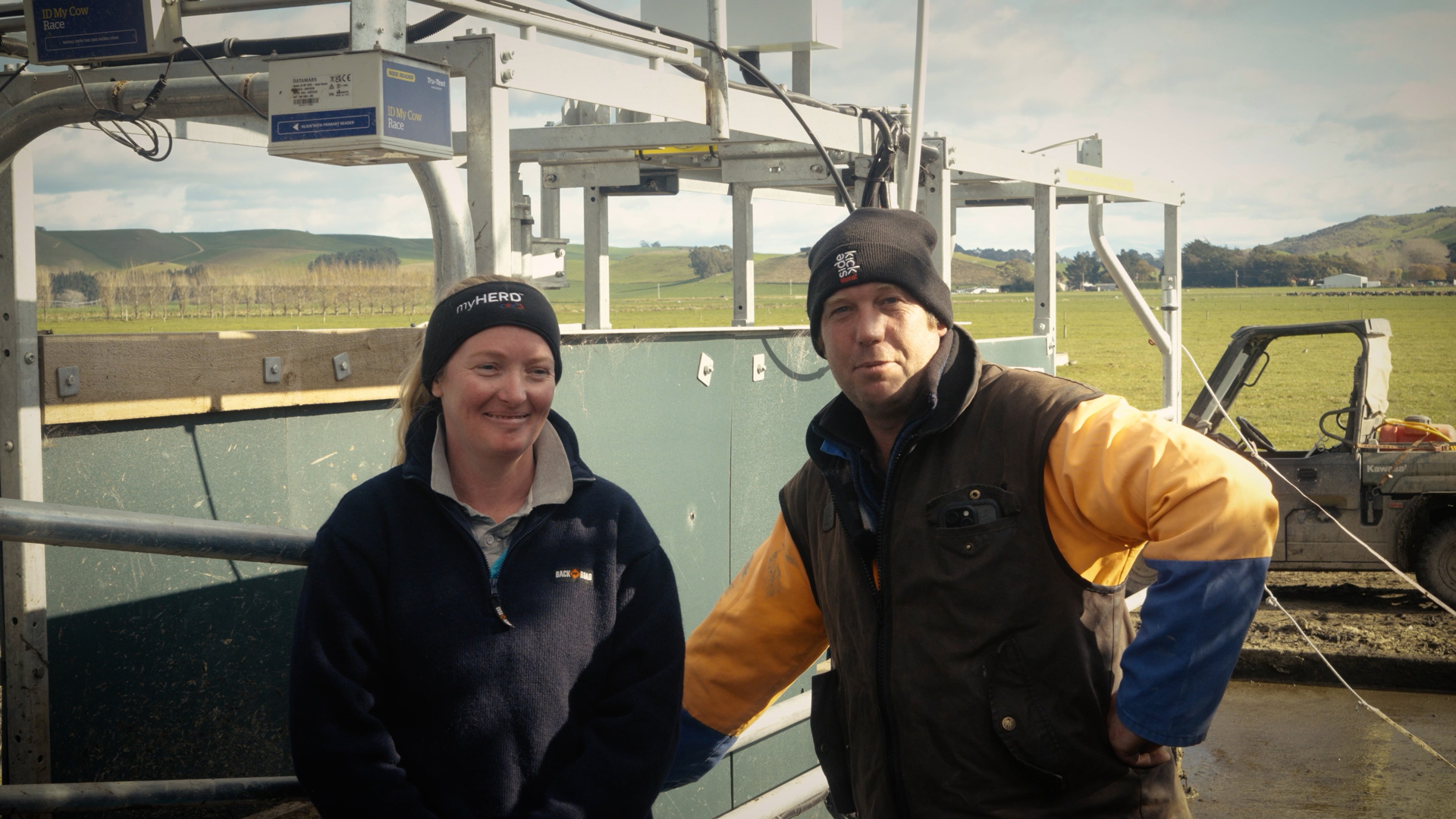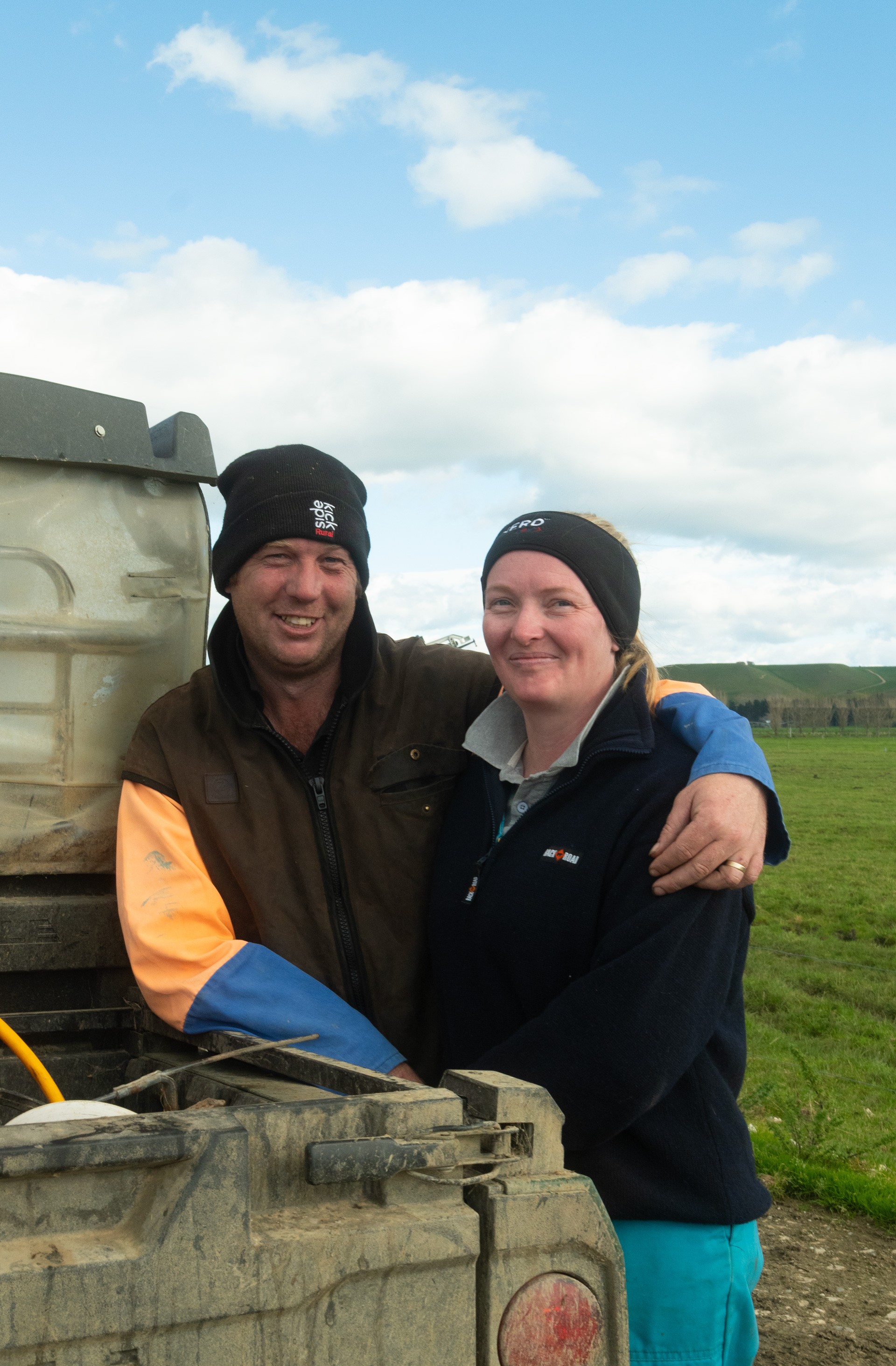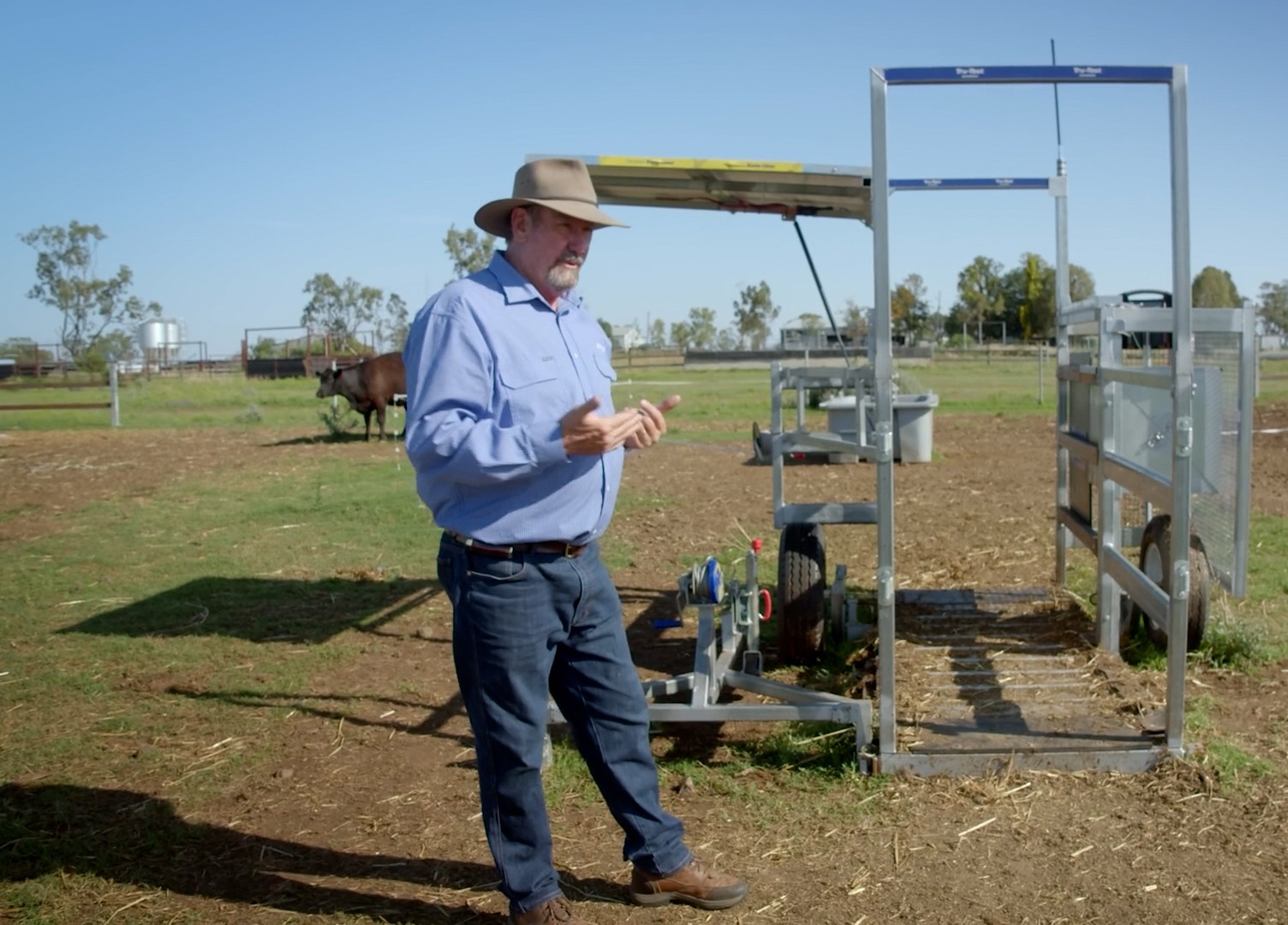


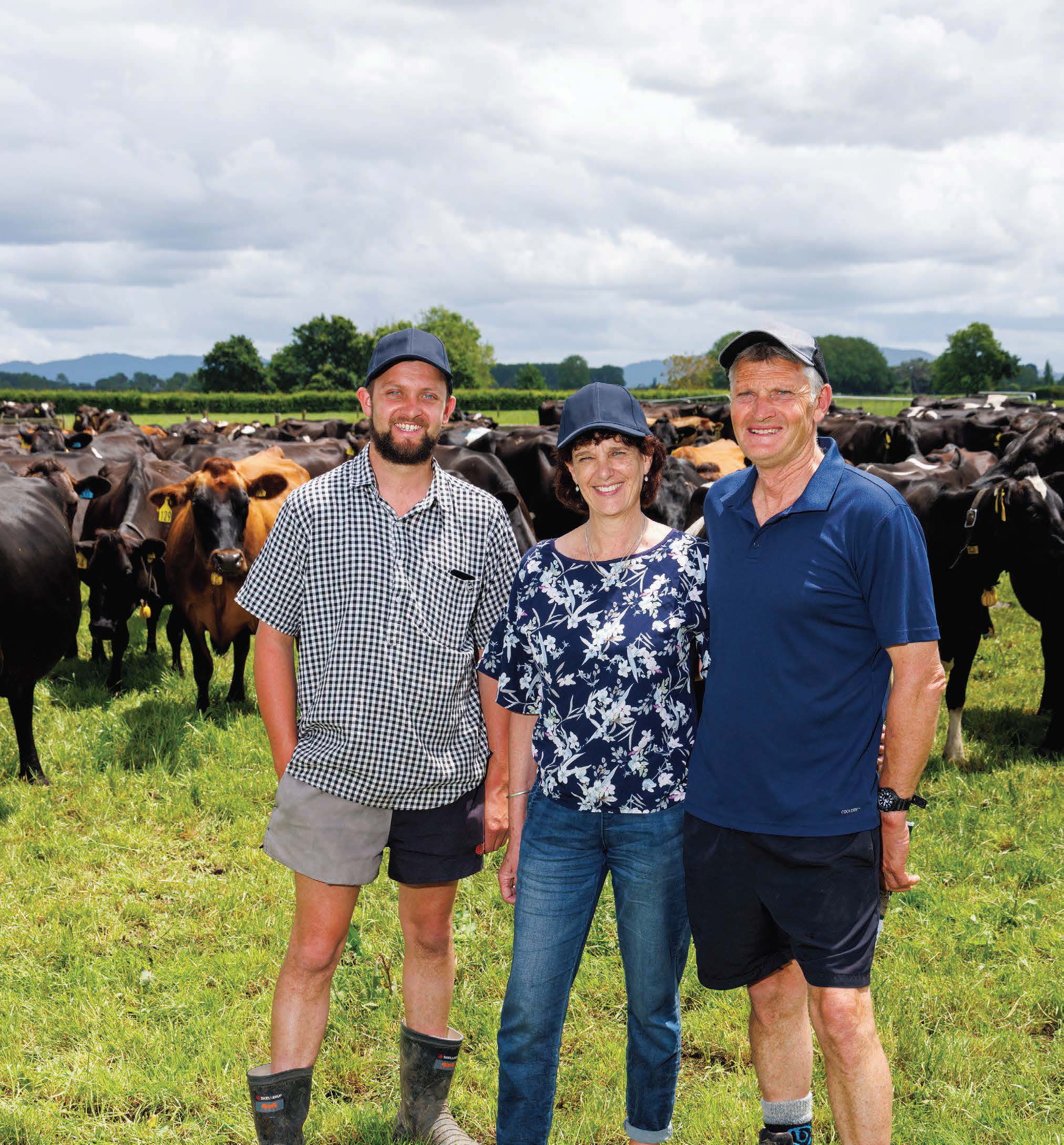
Matthew MacDonald believes investing in wearable technology has made a massive difference in managing his parents' 74 hectare, 247-cow farm near Gordonton, Waikato.
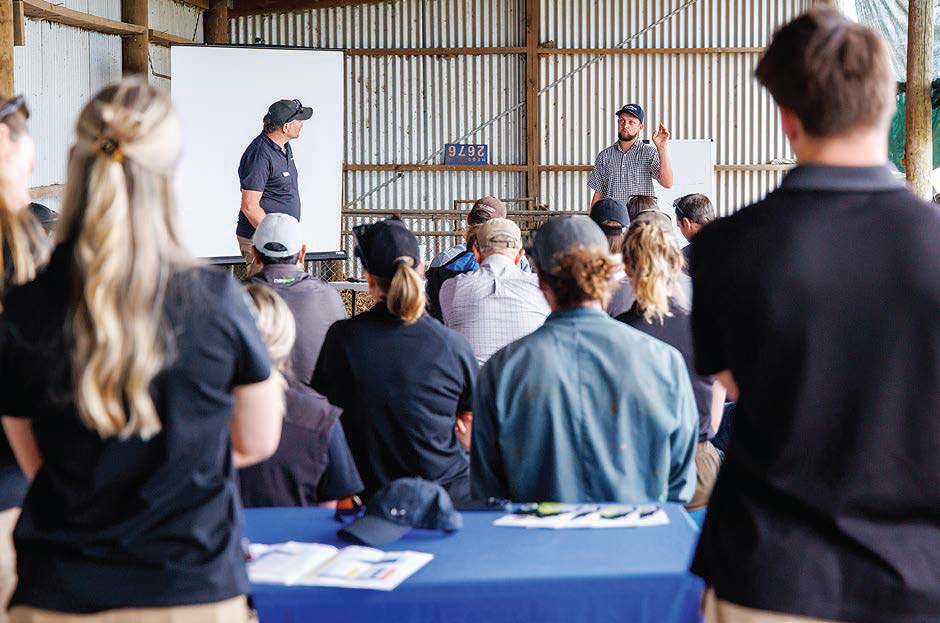
“Wearables have reduced my physical workload, and the data collected has allowed me to be a more efficient farmer,” Matthew told the field day audience.
“Once I come through calving, I’m tired, and I want to be in a good mental game come mating. But doing it mostly by myself, with help from Dad, makes it a long process.”
He is a one-man band on the farm, with his father, David, filling in the gaps.
“It’s a big job for one person and not enough to employ someone full-time. That’s where Dad fits into the situation.
“The technology has helped me make better mating decisions and accurately monitor cow rumination, which has helped fine-tune decisions around feed allocation.”
The wearables were installed on the cows in June 2024. Matthew chose the Datamars Tru-Test tag collars, whose data monitoring is linked to a software box in the milking shed. This has a 1km range, which covers the whole farm, and no other infrastructure is needed.
While heat detection wasn’t an issue, the technology has reduced that workload, and Matthew has also found that he can identify and treat non-cyclers more effectively.
His conception rates have improved; he uses fewer straws and has more accurately timed artificial insemination. He had very few returns last year and achieved a 69% conception rate confirmed through pregnancy scanning. As a result, his 6-week in-calf rate has improved.
On a day-to-day basis, he can check the cows’ rumination length, which helps him make decisions such as drafting and feeding supplements, including maize and palm kernel extract, to the herd at key times.
Huge opportunity with technologies
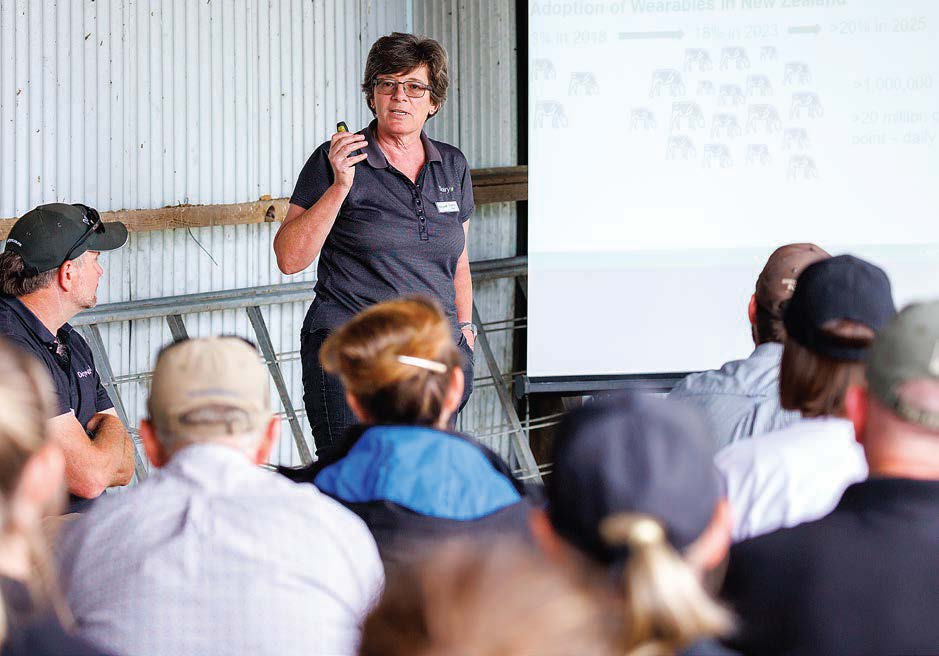
DairyNZ senior scientist Dr Susanne Meier shared data from DairyNZ’s monitoring of wearable uptake, noting approximately a million cows are being farmed using wearable technology, which generates around 20 million data points per day.
“There’s a huge opportunity to create real value on-farm and drive farm key performance indicators through these technologies,” Susanne said.
She backed Matthew’s point about the technology’s non-tangible benefits in on-farm decision-making.
She said the key to making decisions about wearables is identifying the problem they would solve and evaluating the options available for that technology. Having DairyNZ scientists like Susanne at Progressing Dairy Events means farmers can hear the science behind the numbers first-hand, grounding their own practical know-how with independent expertise.
“They are tools that provide data to help you, and they may not fit everybody.
“But in the end, talk to farmers about their real experiences on-farm using the technologies. That will give you the best advice in your decision-making.”
On-farm examples
Wearable technology is becoming more common, so farmers are keen to understand how the data from these tools can support smarter decisions on their own farms. At this event, a farmer panel shared their experiences and the practical benefits they’ve seen.
Martin Lemke installed Cow Manager on his 700-cow farm that he runs as two herds, split into spring and autumn calving. Five years ago, as he looked for ways to improve his herd’s reproductive performance and health, he opted for the technology.
It was a significant learning curve for Martin, who spent the first two years figuring out how to use the vast amount of data the technology provided.
“I had the data, and I wanted to use it properly, so I went to a few seminars that Cow Manager hosted and I learnt a lot,” he said.
After some fine-tuning, his average 6-week in-calf rate increased from 68% to almost 80% on the autumn calving herd and has held steady since. Martin believes seeing the data trends, particularly around rumination, has been the biggest contributor.
“We saw immediate effects by being able to look at the data and do something about it. The longer you have the data, the more attuned you are as well.”
He believes the technology has helped him develop a “sixth sense” around spotting herd health problems.
Sharemilkers Rob and Cassandra Western introduced smaXtec boluses to their 200-cow herd in May last year. By opting for boluses, they didn’t have to invest in any other integrated technology, which was important for their sharemilking business.
Cassandra has been able to use the cow water intake data to lift production, as they were alerted to which cows were not drinking enough. They cleaned all of the farm’s troughs to ensure the water was clean, and those alerts stopped.
“They went from drinking 50 litres a day to nearly 100, per cow, and milk production went up. Our top producing cow drinks around 130L a day,” she said.
Another farmer on the panel, variable order sharemilker Nick Taylor, is into his fourth mating using Allflex collars and said there has been a considerable lift in performance, particularly his 6-week in-calf, as well as production, achieving a record last season and already tracking ahead this season.
We saw immediate effects by being able to look at the data and do something about it.
The improved mating performance enables him to make more informed decisions and gives him options for culling cows.
“Our somatic cell count is super low now compared to what it used to be, as I’ve been able to cull problematic cows,” Nick said.
“We’re more efficient at converting feed into milk as we’re focusing on the more productive cows. It’s all going together in the right direction.”
Glen van Huven has a highly intensive, high-stocking-rate farm and uses Halter as a time-saver. It means he can virtual-fence the farm, whereas in the past, one of his team would spend a whole day reeling off paddock breaks to prepare for the weekend.
“Now we can use our team more efficiently, which was the biggest benefit we were after,” he said.
“It also allows us to be more strategic with feed on the feedpad because we know how much pasture is in the paddock.”
At the end of the event, DairyNZ’s local area manager, Willie McKnight, urged farmers to “do your homework and talk to your neighbours, take your time and think about it”.
“You have to be prepared to monitor the results,” he said. “You’ll all do it for different reasons.”
Progressing Dairy Events brings farmers and DairyNZ experts, and scientists together to share what’s working — and why — so we can all get a little better every season. Find upcoming events at dairynz.co.nz/events
Are wearables right for your farm?
Here’s what farmers learnt and took away from the Progressing Dairy Event on wearable data.
Know your 'why'
Be clear on what you want to achieve before you invest. Talk to other farmers regarding their real-life experiences. Work through what the impact could be on your farm business. Set goals, make sure the technology is the right fit, and track whether it's delivering the results you need.
Tool in the toolbox
Wearables give you timely, objective data to support faster, more consistent decisions. They work best when combined with good stockmanship, solid pasture management, and clear on-farm processes.
Stay ahead of the herd
Real-time insights help you act early. They're most useful when combined with your own experience and a solid understanding of your farm and herd.
Keep the human in the loop
People make the difference. Clear processes and staff training help turn wearable data into practical actions. Make it easy for everyone to know what to look for, when to act, and who to tell.
Article from DairyNZ's Inside Dairy Feb-April 2026.